
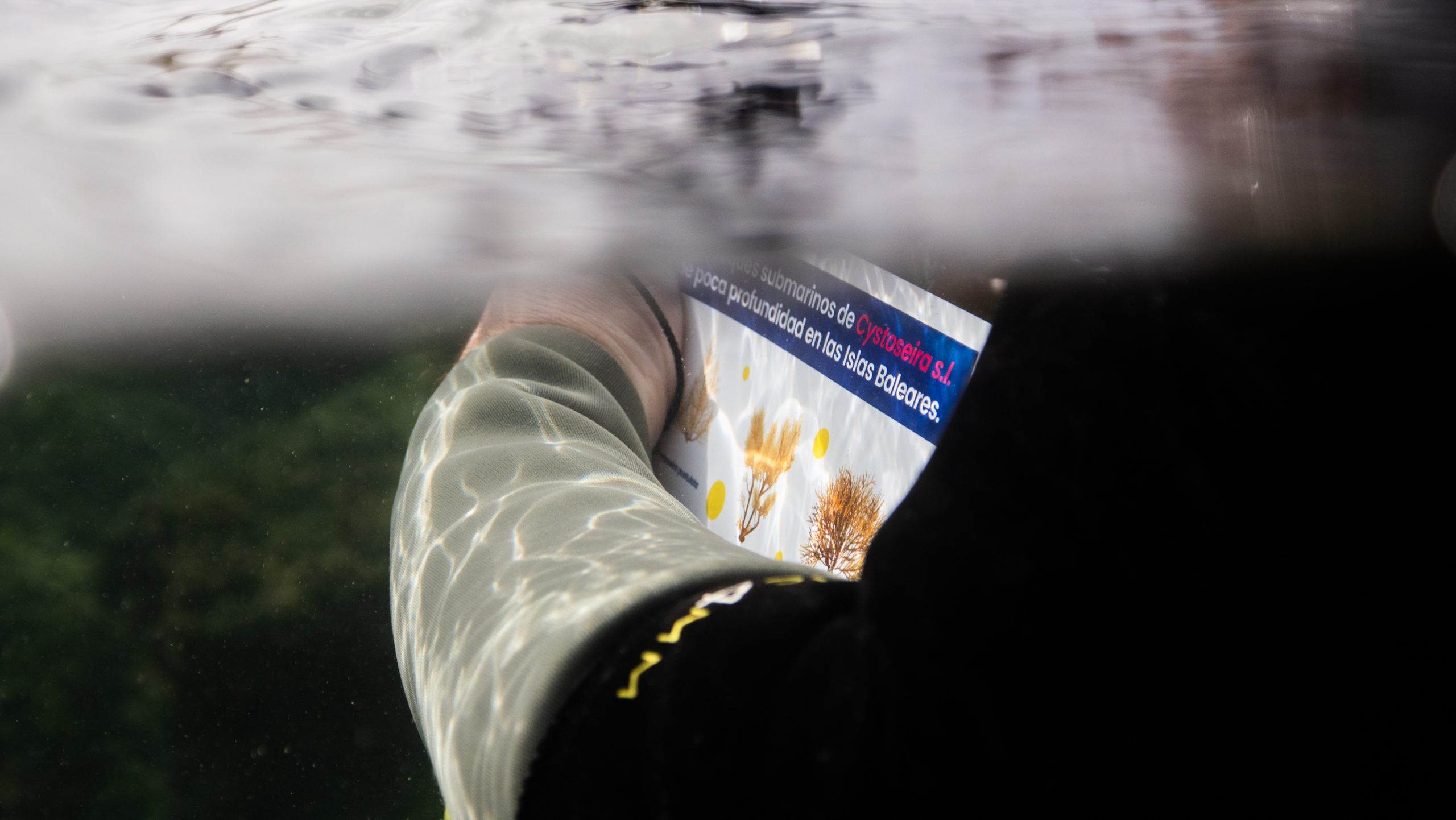

Learn to identify underwater forests
Restoring underwater Cystoseira forests in Mallorca: Why does passive restoration come first, and what is it really?
The underwater forests of Cystoseira are the true lungs of the Mediterranean. These brown algae form ecosystems rich in biodiversity, providing refuge and food for many marine species. However, in recent years, they have suffered a serious decline due to pollution, coastal urbanization, and uncontrolled boat anchoring.
When we talk about recovering these underwater forests, it’s common to think directly about active restoration: replanting, recolonizing, returning what has been lost. But before taking direct measures, it’s essential to take a step back and consider passive restoration. Why? Because if we don’t eliminate the causes that led to degradation, any active restoration efforts will be in vain.
What is passive restoration?
Passive restoration involves eliminating the pressures that impede the natural regeneration of ecosystems. In the case of the Cystoseiras in Mallorca, this means reducing pollution, regulating boat anchoring, and establishing protected areas where these algae can recover on their own. When these negative impacts are eliminated, nature often responds better than we imagine.
When is active restoration necessary?
If after a period of passive restoration, no significant recovery is observed, then active restoration can be considered. This process involves the reintroduction of Cystoseira fragments into areas where they have completely disappeared. However, for this to work, favorable environmental conditions are crucial; otherwise, the efforts could be in vain.

How can you get involved?
The first step to protecting underwater forests is learning how to identify them. At this link, you can download a Cystoseira species identification guide developed by our colleague, Cystoseira expert Tatí Benjumea, to help you recognize them and understand their importance. You can also contribute by respecting protected areas, avoiding anchoring in sensitive areas, and reducing your environmental impact.
If we want a healthier Mediterranean, we must start by giving nature space to recover. Passive restoration is the first and most important step on this path. Are you part of this chain?

